From the founder
4 min read · Published July 19, 2026
The Most Important Minute of Every Stay
The first minute after arrival is when guests decide whether they made the right booking. Here’s why a welcome letter at that moment changes everything.
Most hosts spend their money in the wrong place. We upgrade coffee machines, buy more luxurious linen, install hot tubs, and renovate bathrooms, all in the hope that guests will feel they received exceptional value.
Those things certainly matter. But they all share one problem: your guest doesn't experience any of them until later. Long before they make their first coffee, crawl into bed, or discover the perfectly stocked kitchen, your guest has already started forming an opinion about your property.
In fact, the most important part of a guest's stay happens in the very first moments after they arrive.
The moment every host forgets
Imagine your guest standing outside your front door. They've spent weeks looking forward to this trip, paid a significant amount of money, and navigated airports, traffic, unfamiliar roads, and lockboxes.
And whether they realize it or not, one question is quietly sitting in the back of their mind: “I hope I made the right decision.”
This isn't criticism. It's behavioral science. Psychologists call it post-purchase dissonance, the natural uncertainty that follows any expensive or high-stakes purchase. Whenever we spend a lot of money, our brains instinctively look for reassurance that we haven't made a mistake. The moment the front door opens, that search begins.
Guests arrive as consumers
Before a guest becomes a holidaymaker, they're still a customer. During those first few moments, they aren't relaxing or making memories yet. They're conducting an audit.
The human brain is wired to form remarkably fast first impressions from very small amounts of information. In that first minute, guests are unconsciously collecting evidence to answer a single question: Was booking this place the right decision? Does it look like the photos? Does it smell clean? Is this worth what we spent?
They're not actively trying to find faults. They're simply behaving the way consumers always do after making a significant purchase.
Now imagine something unexpected happens
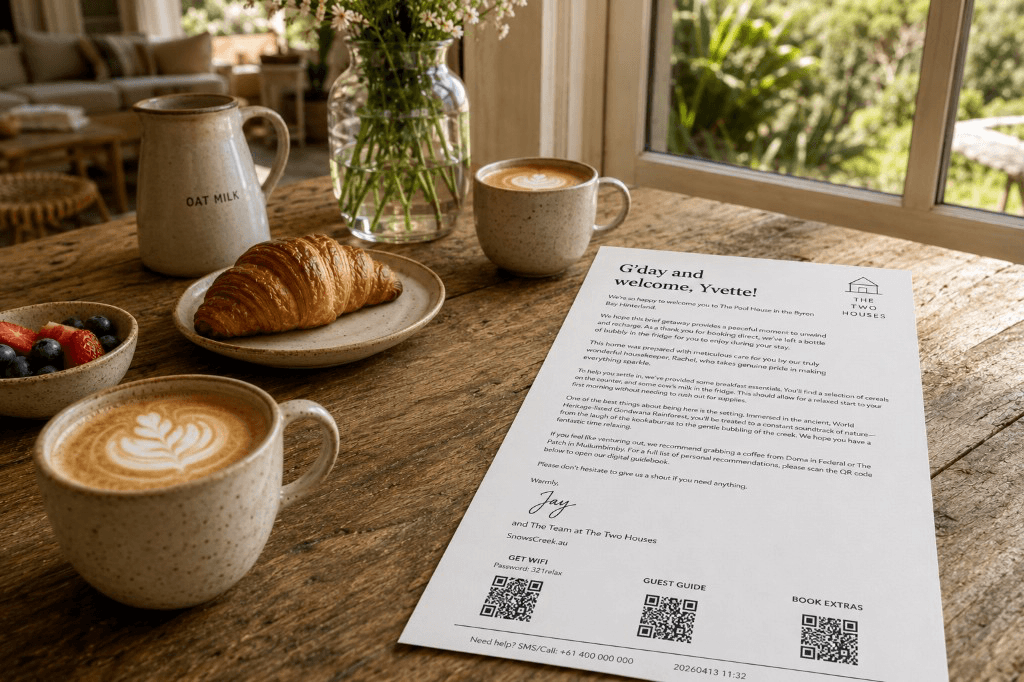
Before they've even had a chance to inspect the kitchen or admire the view, their attention is drawn to something unexpected. A beautifully presented welcome letter. Printed. Waiting for them. With their name on it.
Perhaps it welcomes their dog. Perhaps it acknowledges their anniversary. Suddenly, the evaluation quietly gives way to anticipation. The property no longer feels like a transaction. It feels like someone was preparing specifically for them.
That tiny moment provides exactly what their post-purchase anxiety was looking for: reassurance. The thought quietly shifts from “I hope I made the right decision.” to “I'm really glad we booked this place.”
The domino effect of a good first impression
Once that thought takes hold, something subtle begins to happen. The brain starts looking for proof that it made the right call. Psychologists call this confirmation bias. Instead of unconsciously searching for signs that the property wasn't worth the money, guests begin noticing the details that reinforce the feeling that they chose well.
That, in turn, creates what psychologists call the Halo Effect. A strong first impression begins coloring everything else the guest experiences. Small inconveniences become easier to forgive. Thoughtful details become more meaningful. The stay feels warmer. The host feels more human. For more on how that emotional buffer protects reviews when things go wrong, read Why Goodwill Is the Secret to Better Airbnb Reviews.
Notice something remarkable. The property didn't become cleaner. The bed didn't become softer. The coffee didn't taste better. The only thing that changed was how the stay began.
The real job of a welcome letter
Many hosts assume improving their Value rating means lowering prices or adding more expensive amenities. Sometimes those investments are worthwhile. But guests don't experience value as an accountant would. They experience it emotionally. Perceived value and actual cost are related, but they are not the same thing. For more on how that shapes what guests are willing to pay, read Why Airbnb Guests Happily Pay Premium Prices.
Hospitality isn't just about what you provide. It's about when your guest experiences it. A personalized message sent three days before arrival is nice. A bottle of wine discovered on the second evening is thoughtful. But a personalized welcome letter waiting for your guest, at the exact moment they're wondering whether they made the right decision, is something else entirely.
Because the real job of a welcome letter isn't to say hello. It's to answer the question your guest has been asking themselves since they booked: “Did we make the right decision?”
If you can answer that question in the first minute, the rest of the stay often takes care of itself.
Further reading
The ideas in this article are based on three well-established psychological concepts:
- Post-purchase dissonance (cognitive dissonance): the tendency to seek reassurance after making an important purchase. See: The Decision Lab, Cognitive Dissonance.
- Confirmation bias: our tendency to notice evidence that supports the conclusions we've already reached. See: Farnam Street, Confirmation Bias.
- The Halo Effect: the way a strong first impression influences our overall perception of an experience. See: Nielsen Norman Group, The Halo Effect.