For platform partners
Last updated 2026-09-29
Technical Integration Guide
Technical documentation for booking management platform teams: architecture, data use, API behavior, and security posture for JottoGo integrations.
Looking for a shorter, non-technical summary? See the Platform Partner Overview.
Integration at a glance
- Integration model
- OAuth 2.0 or API credentials
- Architecture
- Cloud-native SaaS
- Tenant model
- Secure multi-tenant isolation
- Guest-facing messaging
- Through the host PMS thread (in development)
- Document delivery
- Host or crew inbox, or property printer
- Processing
- Event-driven
1. Overview
JottoGo creates personalized arrival documents for every short-stay booking. Hosts connect the property management platform they already use, import their listings, and JottoGo turns reservation details and guest messaging history into Guest Jottos, optional Doggo Jottos, and Crew To Do prep sheets.
This guide is for partnerships managers, solutions engineers, API engineers, and security reviewers evaluating a JottoGo integration. It describes how JottoGo connects, what data is consumed, and how guest information is protected.
JottoGo is designed to complement your platform, not replace bookings, calendars, messaging, or the host relationship. The integration adds a focused arrival-document workflow without competing for core PMS functionality.
By helping hosts create more personalized arrival experiences without changing their existing booking workflow, JottoGo adds value to the broader booking platform ecosystem while allowing the PMS to remain the host’s operational hub.
2. Design Goals
JottoGo integrations are designed around four principles:
- Simple for hosts: connect, import listings, and deliver a first Jotto in minutes; finer personalization is optional and can evolve as hosts refine their setup.
- Respectful of partner platforms: follow recommended authentication, webhook, and API practices.
- Reliable: arrival documents should always reflect the latest reservation information.
- Low maintenance: minimal ongoing operational overhead for both hosts and integration partners.
3. Integration Principles
A successful JottoGo integration should feel low-risk for your team and low-friction for shared customers. These principles guide every platform connection.
JottoGo intentionally focuses on the guest arrival experience rather than reservation management, allowing hosts to continue using their booking platform as the single source of truth.
- Webhook-first: event-driven updates are preferred wherever your platform supports them.
- Rate-limit aware: synchronization and personalization respect your API guidance and usage limits.
- Scoped data access: only the endpoints needed for listings, reservations, and guest messages are used.
- Low operational overhead: incoming platform events are processed efficiently, with downstream personalization handled separately to maintain responsive integrations.
- Privacy-first: guest PII is retained only for the active stay and cleared after checkout.
JottoGo complements your PMS
JottoGo is designed to complement, not replace, existing PMS functionality. It consumes reservation details and guest communications already available within your platform and transforms that information into personalized arrival documents and operational prep sheets.
JottoGo does not run or replace the host’s guest messaging. A guest-facing workflow is in development and is not currently shipped. When released, anything it sends a guest will go through the host’s PMS integration, on the existing conversation and in the host’s name, rather than from a separate JottoGo channel. The PMS remains the host’s operational hub.
Required
- Reservation identifier and stay dates
- Property or listing identifier
- Guest name (where your platform provides it)
Highly recommended
- Reservation conversation history for the stay
Optional
- Pet count on the booking record (where your platform provides it)
- Party size and guest counts (adults, children, infants)
- Check-in and check-out times (used in Crew To Do)
4. Customer Experience
From the host’s perspective, integration follows a consistent path regardless of platform:
- Connect: the host authorizes JottoGo through your platform’s supported connection method (OAuth or API credentials).
- Import: the host selects rentable units; each maps to one JottoGo property.
- Sync: reservations and guest fields stay current through your APIs and, where available, webhooks.
- Personalize: JottoGo uses booking details and guest communications to personalize each arrival document.
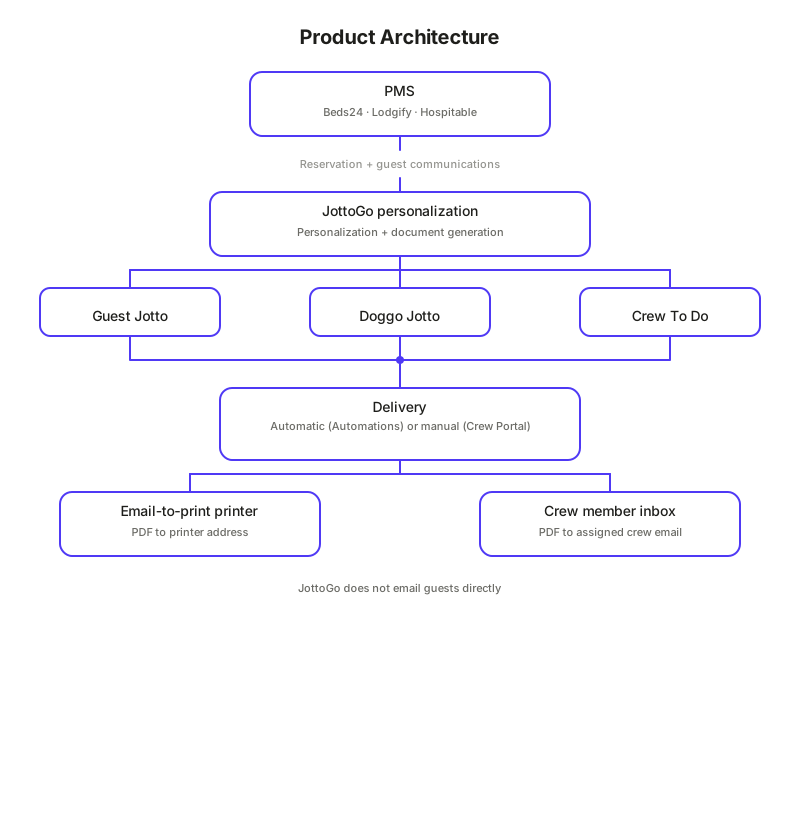
- Deliver: hosts route PDFs to email-to-print printers or crew member inboxes, either automatically on a schedule or manually from the Crew Portal.
5. Delivery model
Every document JottoGo makes is designed to be printed. It goes to the host or crew, or straight to a printer at the property. The guest encounters the Jotto as a physical page at the property, not as an emailed document.
Issuing happens in two ways:
- Automatic: Automations send PDFs on a host-defined schedule (for example, the day before arrival).
- Manual: a host or crew member issues a Jotto from the Crew Portal when they are ready to print.
Delivery destinations
Every issued PDF goes to one or both of: an email-to-print printer address, or a crew member’s inbox. The same routing applies to Guest Jotto, Doggo Jotto (when the booking includes pets), and Crew To Do documents.
6. Technical Architecture
JottoGo is built on a modern cloud-native architecture with secure tenant isolation, managed infrastructure, and an event-driven processing model. Each booking platform integration follows a consistent integration architecture so personalization, document generation, and delivery remain platform independent.
- Connect: OAuth 2.0 where supported by the platform, or scoped API credentials where appropriate; tokens encrypted at rest.
- Import: rentable units are linked to JottoGo properties during host onboarding.
- Sync: reservation and guest data is normalized into JottoGo’s reservation model from your APIs and, where available, webhooks.
- Personalize: reservation details and guest messaging history are processed to generate personalized arrival documents for the current stay only.
- Deliver: PDFs are generated and routed to host-configured printers or crew inboxes on schedule or on demand.
7. Security & Privacy
JottoGo is designed for hosts who entrust the platform with guest information. Security is layered across transport, storage, and access control.
- Transport: HTTPS everywhere; OAuth redirect URIs registered per environment.
- Authentication: OAuth 2.0 where supported by the platform, or scoped API credentials where appropriate. CSRF protection via state cookie; marketplace one-click flows require an active JottoGo session.
- Token storage: industry-standard encryption at rest; tokens are refreshed proactively before expiry.
- Webhook verification: signed webhook verification where supported. Duplicate deliveries return 200 OK without reprocessing.
- Access control: host data is isolated per account; automated processing uses least-privilege credentials.
- Privacy: limited Google Ads conversion measurement on the JottoGo marketing site; no GA4, Facebook pixels, or retargeting from guest data; no selling guest data; no third-party analytics on guest content.
- Retention: guest PII is cleared at 23:59 on checkout day in the property’s IANA timezone. Account deletion permanently removes all host data.
What AI processes
AI only processes information relating to the current reservation. Typically this includes reservation context (dates, guest count, channel), guest messaging text available through your platform, and property context the host has configured in JottoGo.
No unrelated reservation history or cross-booking data is used for personalization. Incoming platform events are processed efficiently, with downstream personalization handled separately to maintain responsive integrations.
8. API Usage
JottoGo is designed to be a lightweight integration partner. API usage follows these principles:
- Platform-appropriate synchronization: JottoGo follows each booking platform’s recommended integration model. Where webhooks are available they are preferred. Where platforms recommend alternative synchronization methods, JottoGo adapts accordingly while respecting API usage guidelines, rate limits, and best practices.
- Scoped requests: only endpoints needed for listings, reservations, and guest messages are called.
- Rate-limit aware: synchronization and personalization are batched to respect your platform’s rate limits and recommended practices.
- Idempotent ingestion: every webhook delivery is stored with your delivery ID; duplicates are acknowledged without reprocessing.
9. Integration Status
Current booking management platform integrations. Status reflects production availability for third-party hosts unless noted.
| Platform | Status |
|---|---|
| Hospitable | Integrated |
| Beds24 | Integrated |
| Lodgify | Integrated |
| Guesty | Integrated |
| Uplisting | Integrated |
| Zeevou | Integrated |
| Smoobu | Integrated |
| Tokeet | Integrated |
| OwnerRez | In development |
| Hostaway | In development |
| RentalWise | In development |
| Track | In development |
| Cloudbeds | In development |
| iGMS | In development |
| Lodgix | In development |
| Streamline | In development |
| Resly | In development |
| Escapia | In development |
| Hostify | In development |
| Hostex | In development |
10. Support & Certification
For new platform partnerships, technical integration questions, or sandbox access:
- When reaching out, include your platform name, expected scopes or API permissions, and a technical contact for webhook testing or OAuth certification.
- A staging environment is available for integration testing and certification.
JottoGo is happy to work directly with your engineering and partnerships teams throughout development, certification, and launch.